
What Is Custom Christmas Light Design and How Is It Different From a Standard Package?
The word “custom” gets used loosely in the holiday lighting industry. Here is what it actually means when the process is done correctly, and what distinguishes it from a standard holiday lighting package in practice.
What Is Custom Christmas Light Design?
Custom Christmas light design is a structured pre-installation process involving a roofline assessment, architectural feature mapping, color scheme and light type selection, and a confirmed design plan the homeowner reviews before installation is scheduled. The installation that results is designed around the specific property rather than applied from a template that has been used on the last thirty houses on the schedule.
That distinction matters more than it sounds. A property is not a generic surface. The roofline on a colonial with dormers handles differently than a craftsman with a covered porch. The warm stone facade of one house responds to warm white light in a way that does not translate to the vinyl siding next door. A custom design process takes those differences into account. A standard package does not, because it was not designed to.
What the homeowner gets at the end of a custom design process is not just a nicer-looking installation. It is an installation that was made for their house specifically. The result looks intentional because it was.
What Is the Difference Between Custom Design and a Standard Holiday Lighting Package?
A standard holiday lighting package applies the same light type, color, and roofline configuration to every property on the installer’s schedule regardless of the architecture or the homeowner’s preferences. Custom Christmas light design starts from the specific property and works outward, which is why two houses side by side with the same number of lights can look completely different depending on which approach was used.
The cost difference between the two is real and worth understanding honestly. Standard packages are priced and installed efficiently because the decisions were made once and applied many times. Custom design requires more time upfront: the assessment visit, the design development, the review and approval process. That time is part of what you are paying for.
For broader context on what both approaches typically cost, the Angi Christmas light installation cost guide covers national average pricing for both standard and custom professional installation. Understanding the general range before receiving quotes makes it easier to evaluate whether what you are being offered matches what the market typically looks like for each approach.
The honest note worth making here: standard packages are not inferior. For a simple single-story roofline with minimal architectural detail, a standard package may produce results that are very close to what a custom design would achieve. Custom design earns its premium on properties where the architecture has enough complexity that generic placement decisions produce a noticeably generic result.
What Does the Custom Christmas Light Design Process Actually Look Like?
What Happens During the Property Assessment?
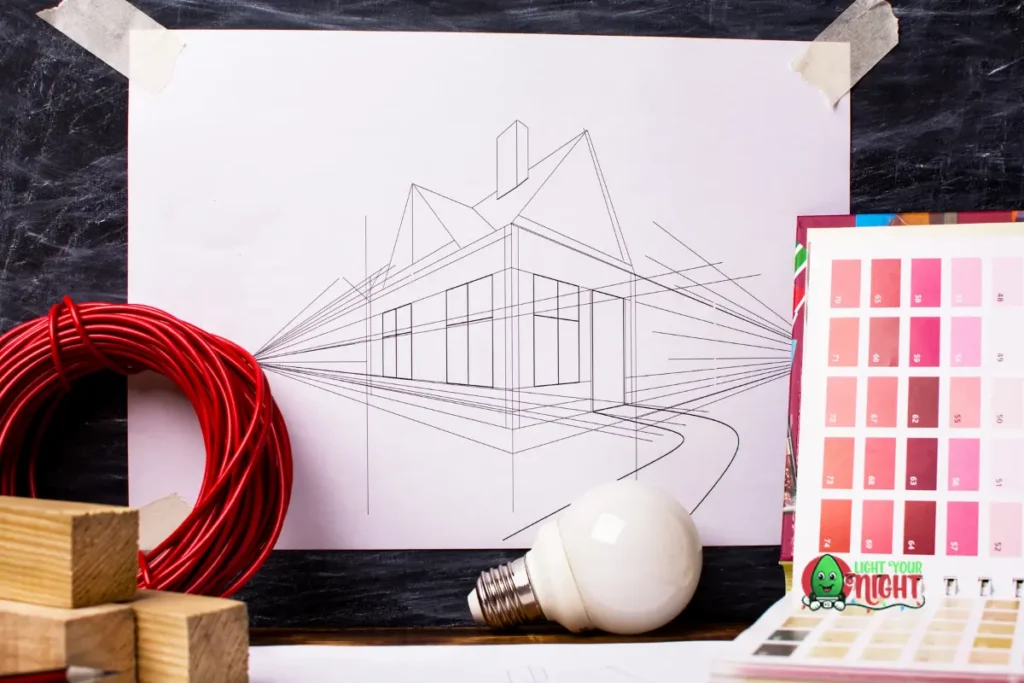
During the property assessment for custom Christmas light design, the designer walks the full exterior of the property, maps the roofline geometry and significant architectural features, notes tree and shrub placements that may be included in the design, and identifies any access considerations that will affect the installation approach.
The homeowner does not need to arrive at this visit with a plan. That is not their job. The designer is looking at things the homeowner has stopped seeing: the way the roofline changes pitch above the garage, the stone facade section that would read very differently under warm white versus cool white, the mature evergreen near the front walk that could anchor a landscape element rather than just being lit generically. The homeowner’s role during the assessment is to answer a few questions about what they have liked or not liked in previous seasons and what general direction feels right. The designer takes it from there.
This is also when access is evaluated. Which sections require ladder placement. Whether any features require extended reach equipment. These considerations affect both the installation approach and the light sourcing decisions that follow.
How Does the Design Plan Get Created and What Does the Homeowner See Before Installation?
After the property assessment, the designer develops a design plan specifying light placement, type, and color temperature for each area of the property. The homeowner reviews and approves this plan before an installation date is confirmed, which means the finished result is not a surprise.
The plan addresses each decision area: roofline treatment including where runs begin and terminate, architectural accent placement, landscaping elements if included, color temperature selection for each zone, and light type by section. The homeowner sees all of this before the installation calendar is touched.
That approval step is one of the most important parts of the process and one of the most underappreciated. It is the point where a homeowner can say “I want to keep the colors to warm white throughout rather than introducing any accent colors” or “I would like the front tree included but not the side plantings.” Those adjustments happen before installation, not during it, and not as a correction after the fact.
The Christmas light installation FAQ on the Light Your Night site covers specific questions about the design review and approval process in detail for homeowners who want more information before the first call.
What Happens on Installation Day for a Custom Design?
On installation day, the Light Your Night crew arrives with equipment and lights sourced for the approved design plan and installs according to that plan. For most residential properties the installation is completed within a few hours. Before the crew leaves, a walkthrough confirms the result matches the approved design.
The walkthrough is where any discrepancy between the plan and the installed result gets addressed. Not after the season ends. Not after the homeowner notices something over the following week. On the day, while the crew is still on-site and corrections are still straightforward.
What installation day is not is a decision day. By the time the crew arrives, every significant choice has already been made and approved. The roofline treatment is set. The color palette is set. The landscaping elements are defined. The crew is executing a plan that exists, not improvising one. That is what the entire pre-installation process was building toward.
Is Custom Christmas Light Design Worth It for Your Home in 2026?
What Types of Properties Benefit Most From Custom Christmas Light Design?
Properties with complex rooflines, distinctive architectural features, multiple material types on the facade, or significant landscaping elements benefit most from custom Christmas light design because those features require specific placement decisions that a standard package cannot make correctly.
A few observable indicators that a property is a good candidate: the roofline changes height or pitch at more than one point; there are architectural details like columns, dormers, arched windows, or a stone or brick facade section worth highlighting; there is established landscaping that is part of how the property reads from the street. If several of those apply, the gap between a standard package result and a custom design result on that property will be noticeable.
For a property where the roofline is simple and continuous, the facade material is uniform, and the landscaping is minimal, a standard package may produce results close enough to a custom design that the premium does not make practical sense. That is worth saying plainly because it is true and because a holiday lighting company that recommends the more expensive option to every homeowner regardless of context is not actually acting in the homeowner’s interest.
How Far in Advance Should You Start the Custom Christmas Light Design Process in 2026?
The custom Christmas light design process for a 2026 holiday season installation should start by September to allow time for the property assessment, design plan development and approval, light sourcing, and installation scheduling before peak season. The process takes longer than a standard booking because of the assessment and approval steps that precede installation.
A homeowner who calls in October expecting a finished custom design and confirmed installation by mid-November is working with a compressed timeline that reduces what the design phase can accomplish and limits the available installation dates. The property assessment needs time. The design review needs time. The light sourcing for a specific design needs time. None of those steps compress well under deadline pressure.
September conversations for November installations give the process the room it needs to work correctly. The result is an installation that was designed properly rather than rushed to fit a closing window on the fall calendar.
What to Do Before the Design Calendar Fills Up
Custom Christmas light design produces a different kind of result because it starts from the specific property rather than from a template, and understanding how that process works makes it significantly easier to decide whether it is the right approach for your home.
Light Your Night handles custom design for both residential and commercial properties across Pennsylvania. The holiday lighting blog has more context for homeowners who want to keep reading before reaching out.
When you are ready to start the design conversation, contact Light Your Night before the fall assessment calendar fills in.